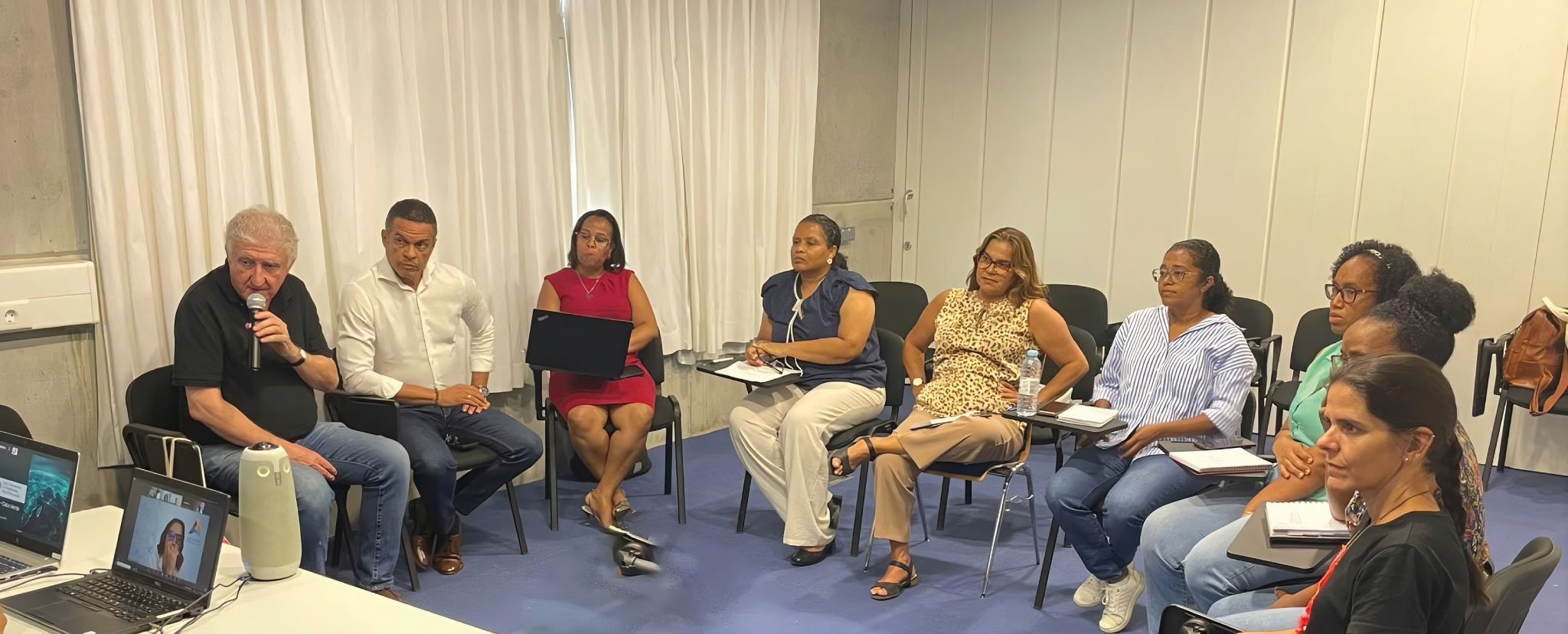
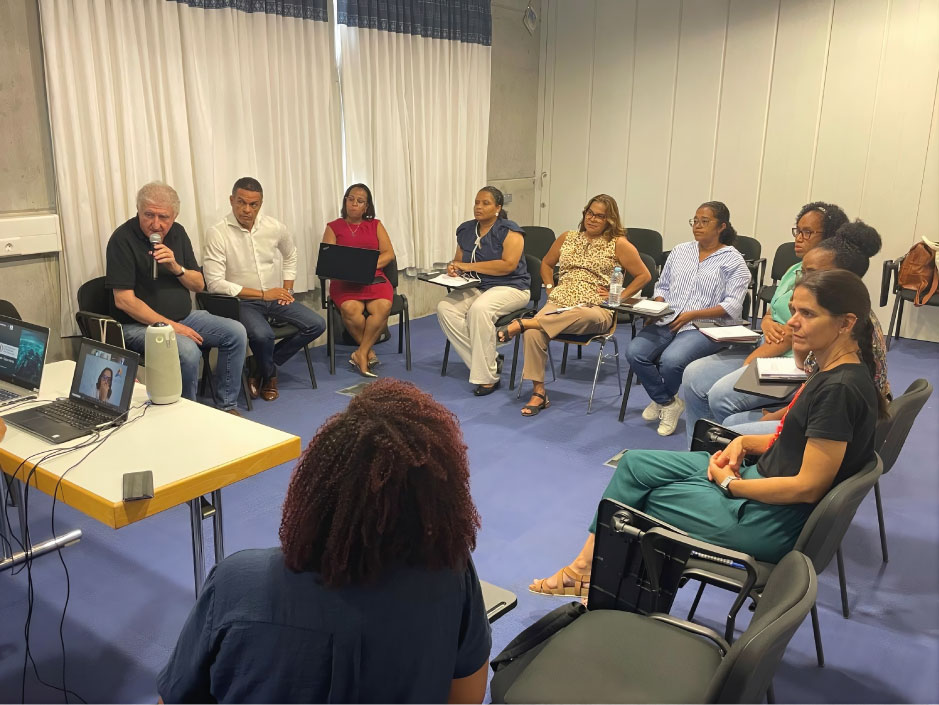
On July 14, 2025, the EO4SURE project held its first Living Lab in Mindelo, Cabo Verde, hosted at the headquarters of IMAR – the Instituto do Mar. The session brought together national stakeholders, including IMAR, the Instituto Nacional de Estatística (INE) of Cabo Verde, the AIR Centre, and Indra Deimos, to co-design solutions for better monitoring of SDG 14 indicators through Earth Observation (EO).
The Living Lab focused on SDG 14.1 (marine pollution), 14.4 (sustainable fisheries), and 14.7 (economic contribution of fisheries to GDP). Discussions centred on how EO-derived data can help improve national reporting by filling existing gaps, complementing traditional fisheries and environmental data sources, and enabling the identification of patterns such as high productivity fishing zones or pollution hotspots.
Participants discussed operational and technical challenges in monitoring artisanal and industrial fishing activities, especially in terms of fleet tracking, landings data collection, and the integration of environmental data into decision-making.
The session also reinforced the importance of cross-institutional collaboration and data harmonisation. Several data requirements for each of the three SDG indicators were identified, including the need for reliable in situ data to calibrate satellite information and for improved methodologies to estimate sustainable fishing yields and economic contributions.
The Cabo Verde Living Lab was a milestone in ensuring that EO4SURE solutions are tailored to the country’s specific context and institutional needs, paving the way for the development of practical and policy-relevant EO-based data pipelines.